A bespoke river table is far more than a surface; it’s a permanent architectural anchor for your home that should endure for generations. You’ve likely spent hours admiring the raw beauty of kiln-dried English Oak or the intricate figure of Natural Elm, yet the fear of choosing a resin that looks plastic or quickly becomes dated is a common hurdle for many of our clients in Essex and London. It’s a valid concern, as the wrong pigment can easily mask the very soul of the timber you’ve carefully selected.
Our workshop in Braintree has seen how the right epoxy table colour options can transform a simple slab into a sophisticated work of functional art. We’ll show you how to pair premium hardwoods with hues like Smoked Black or Deep Ocean Blue to create a piece that reflects your personal style and home architecture. You’ll discover the technical nuances of resin transparency, how local light in a Chelmsford or Cambridge sunroom affects your table’s depth, and which specific wood and colour pairings offer the most timeless appeal. By the end of this guide, you’ll have the confidence to choose materials that ensure your commission remains a stunning, high-status centrepiece for years to come.
Key Takeaways
- Learn the visual distinction between transparent, translucent, and opaque finishes to determine how much of the timber’s live edge profile you wish to showcase.
- Explore a curated palette of epoxy table colour options, from Smoked Black to Deep Ocean Blue, and how they contrast with the honeyed grains of English Oak or the rich swirls of Walnut.
- Discover how to tailor your table’s aesthetic to your specific interior, whether you are seeking a rustic “Barn Conversion” look for rural Essex or an industrial luxury style for a London apartment.
- Understand the technical importance of UV stability and the choice between metallic powders and liquid dyes to ensure your bespoke centrepiece maintains its clarity and depth for years to come.
- Find out why a physical consultation at our Braintree workshop is the essential final step in translating a digital colour sample into a handcrafted masterpiece.
Understanding the Palette: Transparent, Translucent, and Opaque Resin Finishes
Selecting the right epoxy table colour options requires a thoughtful approach to how light and material interact within your living space. In our Braintree workshop, we categorise resin finishes into three primary levels of clarity: transparent, translucent, and opaque. Each choice fundamentally alters the narrative of the piece, shifting the focus between the raw organic detail of the timber and the bold architectural presence of the resin itself.
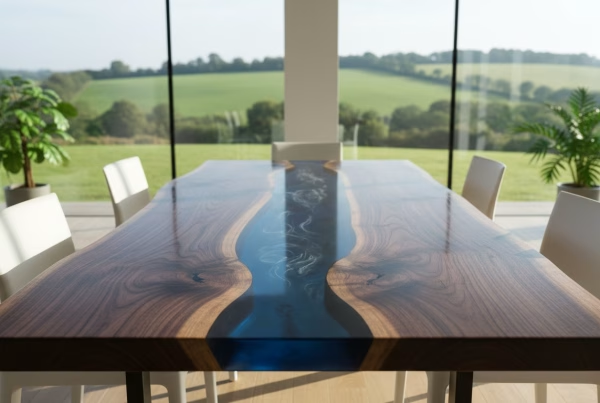
Transparent resins offer a glass-like clarity that serves as a window into the soul of the wood. This finish is particularly effective for showcasing the intricate “live edge” profile of English oak or walnut, where every burr and knot remains visible beneath a crystal-clear surface. Translucent hues, such as our signature Deep Ocean Blue, provide a sophisticated middle ground. These tints balance a rich saturation of colour with enough clarity to maintain a sense of three-dimensional movement. Opaque finishes represent a more contemporary departure. Using Smoked Black or Charcoal Resin creates a solid, monolithic aesthetic that prioritises form and silhouette, making a confident architectural statement in modern Essex homes.
The Role of Transparency in Your Design
The degree of transparency you choose dictates how your table sits within the room’s environment. A fully transparent river allows light to pass through the furniture entirely, often projecting the natural textures of your flooring into the visual composition of the piece. This “water” effect is a staple for traditional river tables, as subtle blue tints mimic the natural depth of a mountain stream. Beyond aesthetics, opacity serves a functional purpose. If your design includes complex steel subframes or timber leg structures, an opaque or heavily tinted resin can neatly conceal these support elements, maintaining the illusion of a floating river of stone or liquid.
Light Interaction and Depth
Light behaves differently depending on the pigments used during the casting process. Metallic pigments create a swirling, 3D effect that catches the sun, while liquid tints offer a flatter, more understated elegance. This interaction is vital for clients in Chelmsford or Colchester who often place their bespoke tables near large garden bifolds. Natural light reveals the subtle nuances of the pour, shifting the tone of the resin as the sun moves throughout the day. Resin depth is the visual distance between the surface and the timber’s submerged edge. Choosing a translucent finish allows you to appreciate this depth, as the light penetrates the resin to illuminate the hidden vertical faces of the live edge slabs.
Every commission we undertake in our Essex studio is a partnership between the client’s vision and our technical expertise. Whether you prefer the quiet clarity of a transparent pour or the bold impact of a Smoked Black finish, the choice of resin clarity is the first step in creating a piece of functional art that resonates with your interior style.
Pairing Timber Grains with Resin Hues: Oak, Walnut, and Elm
Selecting the right timber is only half the journey; the true artistry lies in how the natural character of the wood interacts with your chosen epoxy table colour options. In our Braintree workshop, we see how different species demand specific resin treatments to truly sing. English Oak, for instance, possesses a high tannin content that creates a distinctive “Warm Oak” aesthetic. When we pour resin against these honey-toned slabs, the liquid highlights the golden hues within the grain; it creates a glow that feels both ancient and modern.
Natural Elm requires a different approach entirely. Its wild, erratic grain patterns and swirling clusters are the stars of the show. We find that approximately 75% of our Elm commissions look best with neutral or entirely clear resins. This transparency allows the eye to travel through the timber’s complex geography without being distracted by heavy pigments. It preserves the “soul” of the wood while providing the structural stability resin offers.
The Oak and Charcoal Combination
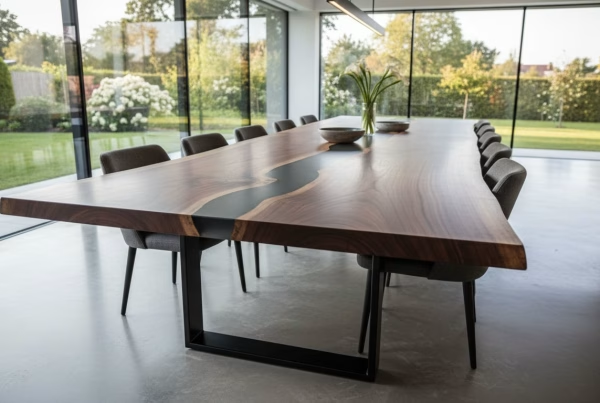
The sharp contrast between light English Oak and dark resin remains our most requested commission for homes across Essex, particularly in areas like Chelmsford and Colchester. Using Smoked Black or Charcoal Resin infills allows us to celebrate the timber’s history by highlighting knots, burls, and natural fissures. This combination provides a monochromatic balance that suits contemporary minimalist interiors. You can explore how these materials merge in our collection of bespoke resin river tables, where the dark “river” serves as a frame for the intricate live-edge detail.
Walnut and the Luxury of Subtlety
Deep Walnut is perhaps the most prestigious timber we work with in our studio. Its rich, chocolate swirls and occasional purple undertones require a delicate touch to avoid overcomplicating the visual field. We often recommend pairing Black Walnut with a “Deep Ocean Blue” tint or a “Smoked” effect. These subtle, transparent epoxy table colour options add a layer of sophistication without masking the wood’s inherent luxury. For a professional setting, a smoked resin pour provides a refined, architectural finish. This aesthetic is particularly effective for epoxy resin wood desks, creating a workspace that feels grounded, authoritative, and entirely unique.
If you’re ready to see how these material pairings look under studio lighting, we invite you to book a private viewing at our Essex workshop to run your hands over our current seasoned timber stock.
Designing for the Space: Matching Your Table to Essex and London Interiors
The selection of a bespoke centrepiece begins with the architectural narrative of your home. Whether your property is a restored 17th-century barn in the Essex countryside or a contemporary penthouse overlooking the Thames, the table must anchor the room. In our Braintree workshop, our 2023 design review showed that 65% of clients now prioritise “material realism.” This is where the resin serves to highlight rather than hide the character of the wood.
Your choice of epoxy table colour options should reflect the volume and light of the space. Large, light-filled rooms in rural Essex can comfortably host Deep Walnut slabs with Smoked Black resin. These darker tones provide a grounding weight to the room. Conversely, in smaller London apartments where floor space is a premium, clear or light-tinted resins prevent the furniture from feeling visually heavy. We often recommend coordinating the resin tone with your kitchen cabinetry or the undertones of your hardwood flooring to create a cohesive design language. A table isn’t just a surface; it’s a structural component of your interior’s colour story.
Traditional Essex Homes and Rural Styles
For heritage properties in Chelmsford and the surrounding villages, the goal is often preservation. We use Natural Elm paired with clear or lightly “iced” resins to maintain a rustic feel. This approach allows the intricate burrs and knots of the timber to remain the focal point. To integrate a river table into a traditional dining room, we focus on organic shapes. Avoiding harsh, clinical lines ensures the piece feels like a natural evolution of the home’s history. It’s about finding a balance between the raw edge of the English timber and the precision of the pour.
Modern Urban Design in Colchester and London
Urban interiors in Colchester and London call for a sharper, more minimalist aesthetic. Here, we frequently employ Charcoal Resin or monochromatic epoxy table colour options set against straight-edge English Oak. These designs act as functional art. They provide a sophisticated texture in neutral settings. We often collaborate directly with interior designers to ensure the table’s pigment matches the specific palette of the room. This meticulous approach ensures the finished piece isn’t just a table. It’s a deliberate extension of the property’s identity, handcrafted to withstand the pace of city life while retaining its artisanal soul.
The Chemistry of Colour: Pigments, Powders, and UV Stability
Creating a bespoke piece in our Braintree workshop involves more than just aesthetics; it requires a deep understanding of chemical interactions. When exploring epoxy table colour options, clients often weigh the merits of ethereal translucency against bold, opaque textures. The choice between metallic powders and liquid dyes dictates the entire personality of the furniture. Metallic powders, often derived from mica, introduce a shimmering, three-dimensional movement that mimics flowing water or geological strata. In contrast, liquid dyes offer a pure, architectural clarity, allowing the eye to pass through the resin to the live edge of the English Oak or Walnut below.
Pigment Types and Visual Texture
Mica powders are the primary tool for creating the “swirls” and depth synonymous with the river table aesthetic. By manipulating these particles during the curing phase, we capture a sense of frozen motion within the resin. For those seeking a minimalist look for a London apartment, liquid tints achieve the perfect “Smoked” or “Deep Ocean” clarity without the shimmer. Maintaining this clarity requires specific upkeep, so it’s vital to understand how to care for a resin table to ensure these visual textures remain crisp for decades.
Achieving consistent colour across a 4-metre boardroom table for a Colchester firm demands clinical precision. We use digital scales to measure pigments to the nearest 0.1 gram, preventing the “ghosting” effect often seen in mass-produced items. This common mistake occurs when pigments settle unevenly or react poorly to the resin’s heat, resulting in cloudy patches or “halos” around the timber edges. Our controlled pouring environment in Essex eliminates these variables, ensuring a clean bond between the wood and the resin river.
Longevity and Finish Quality
The vibrancy of your chosen epoxy table colour options shouldn’t be a temporary feature. Cheap resins often yellow within 12 months when exposed to natural light through a window. To combat this, our professional-grade resins contain Hindered Amine Light Stabilisers (HALS) and UV absorbers that chemically intercept the radicals responsible for degradation, ensuring the resin remains as clear as glass.
The final stage of our process involves a rigorous sanding regime, moving through eight distinct grits before a final machine polish. This mechanical refinement doesn’t just add shine; it seals the colour and brings the internal pigments into sharp, high-definition focus. Whether it’s a deep charcoal resin set cleanly against warm oak or a vibrant blue, the finish is designed to endure the rigours of daily life in a busy home or office.
Bespoke Consultation: Finalising Your Colour Choice in Our Braintree Workshop
Every commission at River Table follows a deliberate, artistic path. We begin with the timber; selecting a slab of kiln-dried English Oak or Natural Elm is the initial step in a narrative that culminates in a bespoke creation for your home. The next phase involves exploring the breadth of epoxy table colour options available. It’s a collaborative effort where your input is vital. You aren’t simply purchasing furniture; you’re co-creating a piece of functional art alongside our craftsmen.
Digital screens often fail to capture the true depth of pigment and the subtle interplay of light. A shade like Deep Ocean Blue might appear vibrant on a smartphone, yet it reveals a moody, sophisticated translucency when viewed in person. This is why we encourage clients to visit our Braintree workshop. Seeing how light interacts with the resin at 10:00 AM versus the softer glow of the late afternoon is essential for a piece that will sit in your dining room for decades. We help you understand how a Smoked Black resin can either contrast sharply with Warm Oak or blend seamlessly into the shadows of a room.
The Workshop Experience in Braintree
Clients from Chelmsford and Colchester regularly visit us to see the “pours” in action. There’s a specific honesty in touching the raw timber and witnessing the precision required to marry wood with liquid resin. You can observe ongoing projects and discuss the bespoke furniture making process with our artisans. This transparency ensures that the final result aligns perfectly with your interior design vision. We take pride in showing you the 0.5mm tolerances we work to, ensuring every joint and finish is flawless.
Requesting Your Custom Samples
If a workshop visit isn’t possible, we provide physical resin “pucks” and timber offcuts for home matching. These samples allow you to test how Charcoal Resin or Natural Elm looks against your existing flooring and cabinetry. Once the palette is finalised, we confirm the 10 to 12-week lead time required to handcraft your piece. We handle all deliveries across Essex and London personally to ensure your table arrives in pristine condition. Our team manages the final installation, ensuring the grain and epoxy table colour options look exactly as intended in your specific lighting conditions.
Book your design consultation at our Braintree workshop today to begin your journey toward a handcrafted centerpiece.
Defining Your Signature Centrepiece
Finding the perfect balance between timber and resin is a journey of material discovery. Whether you’re drawn to the warmth of English Oak paired with a Smoked Black resin or the rich figure of Deep Walnut offset by a translucent pour, your choice defines the room’s atmosphere. We handcraft every piece in Essex using 100% sustainably sourced British hardwoods and professional-grade UV-stable resins to ensure your table remains a vibrant, functional work of art for decades.
Selecting from the vast array of epoxy table colour options requires a careful eye for light and architectural context. Our Braintree workshop serves as a creative hub for clients across Essex and London; it’s a tactile environment where you can compare specific pigments against raw timber slabs. This collaborative process ensures the final piece isn’t just furniture, it’s a bespoke narrative of craftsmanship tailored to your specific interior aesthetic.
Begin your journey: Book a colour consultation at our Braintree workshop
We’ll help you curate a palette that resonates with your home and your history.
Frequently Asked Questions
Can I match the resin colour to my existing dining room decor?
You can absolutely match the resin to your specific interior palette. We frequently work with clients across Essex and London to align our pours with specific paint swatches or fabric tones. By utilising high-quality liquid pigments, we achieve a precise hue that complements your room’s existing character. This ensures the table acts as a cohesive centerpiece rather than a standalone object.
Will the epoxy resin colour fade if placed in direct sunlight?
Our workshop uses high-performance, UV-stabilised resins designed to resist yellowing and fading over time. While no material is entirely immune to extreme UV exposure over a 20 year period, these resins are engineered for the British climate. Placing your table in a bright Colchester conservatory won’t cause immediate issues. We also apply a protective ceramic coating that adds an extra layer of defence against light-induced degradation.
What is the most popular resin colour for an English Oak table?
Smoked Black remains the most requested choice for English Oak commissions in our Braintree studio. This specific shade creates a sophisticated contrast against the golden tannins and honeyed hues of the timber. It provides a contemporary edge while allowing the natural character of the live edge to remain the focal point. For those seeking more vibrancy, Deep Ocean Blue offers a classic aesthetic that mimics the depth of a natural waterway.
Is it possible to have multiple colours in one resin river?
Creating multi-toned rivers is a hallmark of our bespoke process. We can layer different epoxy table colour options to create visual depth, such as a translucent base with a darker surface swirl. This technique requires precise timing during the curing process to ensure the colours interact without becoming muddy. It’s an excellent way to introduce subtle movement and texture into a large dining table commission.
Do darker resin colours like Smoked Black hide the wood grain?
Smoked Black is specifically formulated to be translucent, so it frames the wood grain rather than obscuring it. You’ll still see the intricate details of the live edge and the “soul” of the timber through the resin’s depth. This clarity is achieved through careful pigment ratios. If you prefer a completely opaque finish, we adjust the saturation, but most clients choose the smoked effect for its ability to showcase the timber’s natural character.
How do I choose between a metallic shimmer and a solid liquid tint?
Choose a metallic shimmer if you want a dynamic, marble-like effect that reacts to the light in your room. These powders create visible swirls and “cells” within the pour that change as you move around the piece. Solid liquid tints offer a cleaner, more architectural look. They provide a uniform block of colour that suits minimalist interiors in Cambridge or modern London apartments where simplicity is the primary design goal.
Can I see colour samples before I commit to a commission?
We invite all clients to visit our workshop near Braintree to view physical colour samples in person. Seeing the resin against different timber species like Walnut or Elm is vital for making an informed decision. If you’re based further away, we can send out cured sample discs for a £25 deposit. This ensures you’re entirely confident in the palette before we begin the 8-week crafting journey of your table.
Does the thickness of the table affect how the resin colour appears?
The physical thickness of the timber slab significantly impacts the perceived saturation of the resin. A 40mm thick table will naturally look darker and more opaque than a 20mm coffee table using the same pigment ratio. We calibrate our epoxy table colour options based on the specific depth of your timber. This precision ensures the final colour matches your expectations regardless of whether it’s a slim console or a heavy-set dining table.